In the fast-paced world of financial markets, trading strategies come and go. Technical patterns fall in and out of favour. Macro themes dominate headlines for a quarter, then vanish. But through every cycle, every crash, and every bull run, one philosophy has endured — index investing.
From the pioneering work of John Bogle at Vanguard to the explosive growth of exchange-traded funds (ETFs) in the 21st century, tracking and trading indices has proven to be one of the most reliable, cost-effective, and scalable strategies available to both retail investors and institutional portfolio managers. Today, over $15 trillion in global assets are benchmarked to indices — and that number continues to grow.
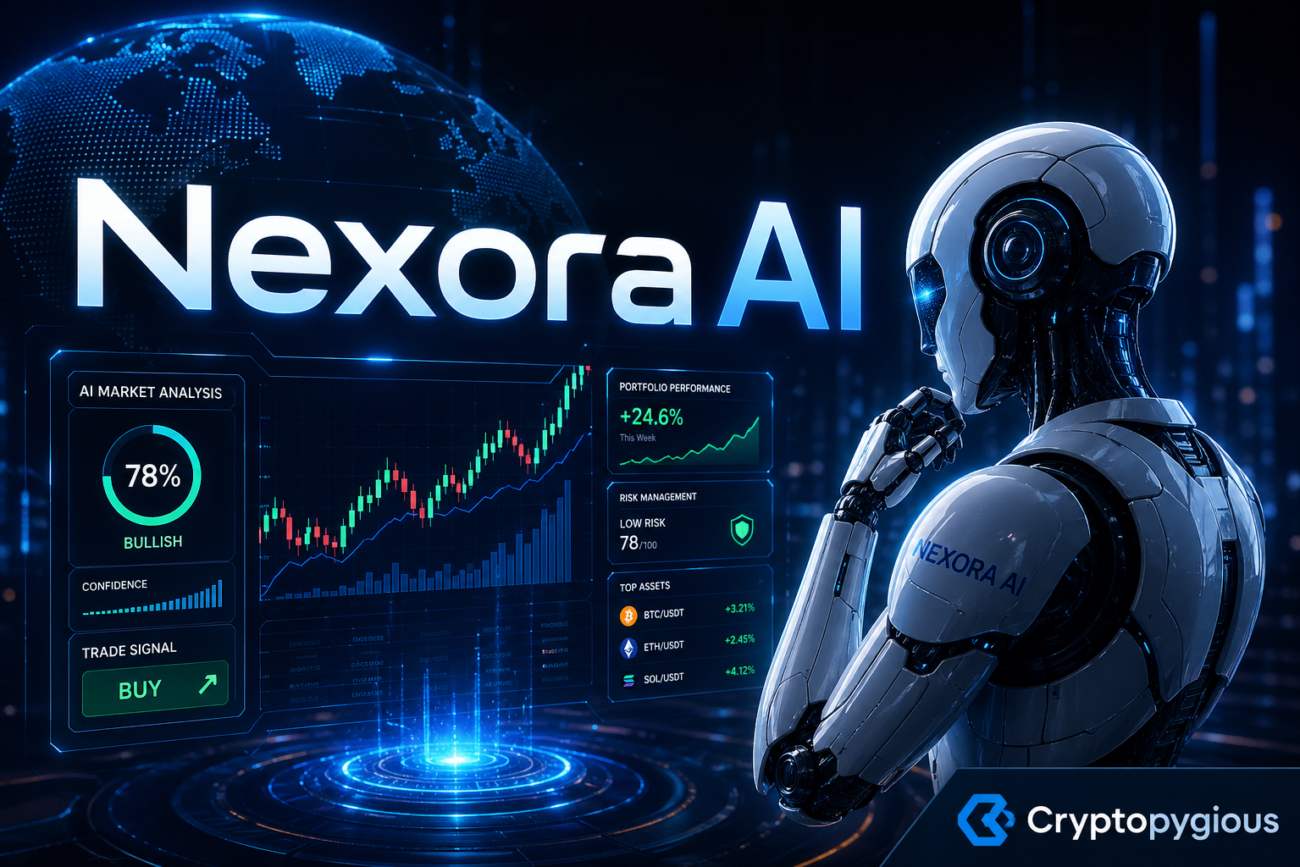
But here’s the thing most platforms miss: indexing isn’t just about passive buy-and-hold. In the modern era, indices are dynamic, data-rich, and full of trading opportunities that active AI-powered strategies can exploit. At Nexora AI Trading Platform, we’re redefining what index trading means — blending the discipline of indexing with the precision of artificial intelligence to deliver a smarter, more adaptive approach to market participation.
🚀 Visit Nexora AI Official Website
Part 1: Understanding Indexing — A Foundation Built on Data
What Is a Financial Index?
A financial index is a statistical measure that tracks the performance of a specific group of assets — typically stocks, bonds, commodities, or other securities. Think of it as a snapshot of a market segment, a sector, or even an entire economy, captured in a single number that updates in real time.
The most widely recognised indices include:
- S&P 500 — 500 of the largest publicly traded companies in the United States
- NASDAQ-100 — the top 100 non-financial companies listed on the Nasdaq exchange, heavily weighted toward technology
- Dow Jones Industrial Average (DJIA) — 30 major blue-chip American corporations
- FTSE 100 — the 100 largest companies on the London Stock Exchange
- Nikkei 225 — a price-weighted index of Japan’s top 225 companies
- MSCI World Index — over 1,500 large and mid-cap equities across 23 developed markets
Each index is constructed using a specific methodology — market capitalisation weighting, price weighting, equal weighting, or factor weighting — and each serves as both a performance benchmark and a tradeable instrument.
How Are Indices Constructed?
Index construction is a rigorous, rules-based process. Index providers like S&P Dow Jones Indices, FTSE Russell, and MSCI define eligibility criteria including market cap thresholds, liquidity requirements, domicile rules, and sector classifications. Constituent lists are reviewed periodically — usually quarterly or semi-annually — and companies are added or removed based on updated data.
This is where active trading opportunities emerge. Index reconstitutions — the process of adding and removing stocks — can cause significant price movements as fund managers and algorithmic traders reposition. Stocks being added to major indices often experience sharp rallies; stocks being removed often face sell pressure. Nexora AI’s reconstitution alerts and predictive models are designed to capture these systematic price movements before the crowd.
Active vs. Passive: The False Dichotomy
For decades, investors were told to choose: be a passive index investor or an active stock picker. But this framing is outdated. Today’s most sophisticated market participants use indices both as passive benchmarks and active trading vehicles.
A passive strategy might involve regularly buying an S&P 500 ETF and holding it long-term, capitalising on the market’s historical average return of approximately 10.5% annually over the past century. An active index strategy, on the other hand, might involve rotating between sector indices based on macroeconomic signals, trading volatility around index reconstitutions, or using leveraged index products to amplify returns during trending markets.
Nexora AI is built for both. Whether you want disciplined, automated rebalancing of a long-term index portfolio or an AI-powered engine that scans sector and factor indices for short-term trading signals, the platform adapts to your goals.
Part 2: The Science of Index Weighting — Why Construction Matters
Understanding how an index is built is not just academic — it directly impacts performance, risk, and strategy design.
Market-Cap Weighting: Power to the Largest
The majority of major indices use market capitalisation weighting, meaning larger companies have a greater influence on the index’s performance. In the S&P 500, for instance, the top 10 holdings can account for more than 30% of the entire index’s movement. This creates a concentration risk that many investors overlook.
For traders, this creates a key insight: when mega-cap technology stocks (Apple, Microsoft, NVIDIA, Amazon) move strongly, they can drag the entire index with them — even if the broader market is flat or declining. Nexora AI tracks intra-index correlation in real time, alerting traders to divergence events where the index top-heaviness creates potential mean-reversion trades.
Equal Weighting: Democratising Exposure
Equal-weight indices assign the same weighting to every constituent regardless of size. This approach tends to outperform market-cap indices during small- and mid-cap bull markets but can underperform during periods of mega-cap dominance. The S&P 500 Equal Weight Index (RSP) often serves as a market breadth indicator — when it diverges significantly from the standard S&P 500, it signals shifts in the market’s underlying health.
Nexora AI monitors the spread between cap-weighted and equal-weighted versions of major indices as part of its Market Breadth Intelligence module, providing traders with real-time context on whether rallies are broad-based or narrowly driven.
✅ Check Nexora AI Availability Now
Factor Indices: The Rise of Smart Beta
Between pure passive and pure active investing sits a growing category: factor investing, also known as smart beta. Factor indices are constructed to tilt toward specific return drivers that academic research has identified as persistent sources of alpha:
- Value — stocks trading at low multiples relative to fundamentals
- Momentum — stocks with strong recent price performance
- Quality — companies with high profitability and stable earnings
- Low Volatility — stocks with historically lower price swings
- Size — smaller companies that historically outperform over long horizons
Factor indices have democratised what was once the exclusive domain of quantitative hedge funds. Nexora AI’s platform includes a Factor Rotation Engine that uses machine learning to predict which factors are likely to outperform based on the current macroeconomic regime, interest rate environment, and market sentiment data.
Part 3: Trading Indices in Practice — Instruments, Mechanics, and Markets
Ways to Gain Index Exposure
Modern traders have multiple vehicles for accessing index performance:
1. Exchange-Traded Funds (ETFs) ETFs are the most popular and accessible way to trade indices. They trade like stocks on exchanges, offer real-time pricing, and typically carry very low expense ratios. SPDR S&P 500 ETF Trust (SPY), for example, has over $500 billion in assets under management and trades billions of dollars of volume every day.
2. Index Futures Futures contracts on major indices (E-mini S&P 500, Nasdaq-100, FTSE 100, Nikkei 225) allow traders to take leveraged positions with lower capital requirements. They are highly liquid, trade nearly 24 hours a day, and are preferred by institutional and professional traders for hedging and speculation.
3. Contracts for Difference (CFDs) CFDs on indices allow retail traders to go long or short on an index without owning the underlying securities. They offer leverage and flexibility but require careful risk management.
4. Index Options Options on indices (and index ETFs) provide a way to trade volatility, hedge existing positions, or implement complex directional strategies. The VIX — the CBOE Volatility Index — is itself derived from S&P 500 options and serves as the market’s “fear gauge.”
5. Inverse and Leveraged ETFs Products like 2x or 3x leveraged ETFs, or inverse ETFs that rise when the index falls, allow traders to amplify index exposure. These are powerful but require precise timing and active management due to daily rebalancing effects.
Nexora AI supports all of these instrument types within a single, unified interface. Our smart order routing system and AI execution engine are calibrated for each product’s specific liquidity profile and pricing dynamics.
Part 4: How AI Is Revolutionising Index Trading
The intersection of artificial intelligence and index trading is where Nexora truly shines. While traditional index investing is rules-based and backward-looking, AI brings forward-looking predictive power, real-time adaptability, and pattern recognition at a scale that no human trader can match.
Signal Generation at Scale
Nexora AI ingests and analyses thousands of data streams simultaneously:
- Price and volume data across all major index constituents
- Macroeconomic indicators — GDP releases, inflation data, central bank decisions
- Sentiment data — news flow, earnings call transcripts, social media signals
- Options market data — implied volatility surfaces, put/call ratios, gamma exposure
- Cross-asset signals — bond yields, currency moves, commodity prices, credit spreads
Our proprietary NexoraSignal™ engine uses ensemble machine learning models — combining gradient boosted trees, recurrent neural networks, and transformer-based NLP models — to synthesise these inputs into clear, actionable trading signals on individual indices and index segments.
🔍 Access Nexora AI Platform
Regime Detection and Adaptive Strategy Switching
One of the most powerful applications of AI in index trading is market regime detection. The behaviour of indices changes dramatically depending on the prevailing regime — trending bull markets, range-bound consolidation, high-volatility correction phases, or crisis conditions. A strategy that performs brilliantly in a low-volatility trend will often fail catastrophically in a volatile, mean-reverting environment.
Nexora’s Regime Intelligence Module continuously monitors over 40 market indicators to classify the current regime in real time. When a regime shift is detected — say, from a “risk-on trend” regime to a “risk-off volatility” regime — the platform automatically adjusts strategy parameters, position sizing, and hedging overlays. Traders receive instant notifications with actionable guidance on how to reposition their index exposure.
Predictive Reconstitution Alpha
As mentioned earlier, index reconstitutions create some of the most predictable price movements in financial markets. When a stock is announced for inclusion in a major index, passive funds that track the index are obligated to buy it — creating forced demand that experienced traders can front-run.
Nexora AI’s Reconstitution Predictor uses a combination of fundamental screening, index eligibility criteria, and historical reconstitution data to identify stocks that are likely to be added or removed from key indices before the official announcement. This predictive edge has historically been one of the most reliable sources of systematic alpha available to quantitative traders.
AI-Powered Portfolio Construction
Beyond trading signals, Nexora AI helps clients build smarter index-based portfolios through:
- AI-Driven Asset Allocation — dynamic weighting across multiple indices based on risk-adjusted expected returns
- Tax-Loss Harvesting Automation — systematic realisation of losses in index positions to offset gains, optimising after-tax returns
- Rebalancing Optimisation — intelligent rebalancing that minimises transaction costs and market impact
- Correlation Mapping — real-time visualisation of how different indices and sectors are moving together or diverging
Part 5: Sector and Thematic Indices — Finding Edge in the Details
Beyond broad market indices, a rich ecosystem of sector, thematic, and specialised indices offers targeted exposure to specific economic trends.
GICS Sector Indices
The Global Industry Classification Standard (GICS) divides the market into 11 sectors: Technology, Healthcare, Financials, Consumer Discretionary, Consumer Staples, Industrials, Energy, Materials, Utilities, Real Estate, and Communication Services. Each sector has its own index, ETF, and distinct sensitivity to economic cycles.
Nexora AI’s Sector Rotation Dashboard tracks the relative performance, momentum, and fundamental valuation of all 11 GICS sectors simultaneously. Our AI sector rotation model identifies which sectors are likely to outperform based on the current phase of the economic cycle, delivering rotation signals with historical backtested accuracy.
Thematic Indices: The Future of Investing
Thematic indices focus on structural, multi-year megatrends rather than traditional sector classifications. These include indices tracking:
- Artificial Intelligence & Robotics — companies developing and deploying AI infrastructure
- Clean Energy Transition — solar, wind, battery storage, and EV companies
- Cybersecurity — firms protecting digital infrastructure
- Genomics & Biotech Innovation — next-generation healthcare companies
- Digital Infrastructure — data centres, cloud computing, semiconductor supply chains
Thematic investing has captured massive investor interest because it aligns portfolios with long-term structural shifts in the global economy. Nexora AI monitors over 200 thematic indices globally, providing traders with early signals on thematic momentum shifts — identifying when a theme is gaining or losing institutional interest before it becomes front-page news.
⚡ Start with Nexora AI Today
Volatility Indices: Trading Fear Itself
The CBOE Volatility Index (VIX) — often called Wall Street’s “fear gauge” — measures expected volatility in the S&P 500 over the next 30 days. It typically spikes during market selloffs and falls during calm, trending markets. Trading the VIX and related volatility products (VIX futures, VIX ETPs, options on VIX) is a sophisticated strategy that Nexora AI fully supports.
Our Volatility Intelligence Suite includes:
- Real-time VIX term structure analysis
- Volatility risk premium (VRP) signals for systematic short-vol strategies
- Tail-risk hedging recommendations based on current VIX levels
- Correlation between VIX and underlying equity index moves
Part 6: Risk Management in Index Trading — The Nexora Approach
No trading strategy, however sophisticated, eliminates risk. What differentiates elite traders is not the absence of losing trades — it’s the robustness of their risk management framework.
Position Sizing with AI
Nexora AI uses the Kelly Criterion and modern portfolio theory to recommend optimal position sizes for every index trade. Rather than using fixed lot sizes, our dynamic position sizing engine adjusts exposure based on signal confidence, current market volatility, correlation with existing positions, and overall portfolio risk budget.
Drawdown Protection
Every index trading strategy deployed on Nexora is subject to automated drawdown controls. Traders set maximum daily, weekly, and portfolio-level drawdown limits. When these thresholds are approached, the AI engine automatically begins reducing exposure — hedging positions, tightening stops, or moving to cash — to protect capital and ensure the strategy can continue operating.
Stress Testing and Scenario Analysis
Before deploying capital, traders can run their index strategies through Nexora’s Historical Stress Testing Engine, which simulates performance across major market events: the 2000 dot-com crash, the 2008 financial crisis, the 2010 flash crash, the 2020 COVID selloff, the 2022 rate shock, and custom scenarios defined by the user. This gives traders a realistic picture of how their strategies would have performed under extreme conditions.
Part 7: Getting Started with Index Trading on Nexora AI
Whether you’re building your first index portfolio or deploying a sophisticated AI-driven index strategy, Nexora AI is designed to meet you where you are.
Step 1: Define Your Objectives
The platform starts with a comprehensive Trading Profile Assessment — a structured questionnaire that identifies your risk tolerance, investment horizon, preferred asset classes, target return objectives, and experience level. This data powers personalised AI recommendations throughout your Nexora journey.
Step 2: Explore the Index Universe
Nexora’s Index Explorer gives you access to over 5,000 indices across equities, fixed income, commodities, currencies, and volatility. Each index page includes live pricing, constituent data, historical performance, volatility metrics, correlation matrices, and AI-generated commentary on current market conditions.
Step 3: Build Your Strategy
Choose from three strategy-building pathways:
- Guided Strategy Builder — step-by-step AI assistance for beginners, producing a rules-based index strategy in minutes
- Signal-Based Trading — subscribe to pre-built Nexora AI signals on specific indices and let the platform manage execution
- Advanced Quant Lab — a professional-grade environment for experienced traders to code, backtest, and deploy custom index strategies using Python
Step 4: Paper Trade and Backtest
Every strategy undergoes a mandatory paper trading phase before live deployment. This lets you observe AI decision-making, review signal accuracy, and build confidence — without risking real capital. Nexora’s backtesting engine runs simulations across up to 20 years of historical data, factoring in realistic transaction costs, slippage, and market impact.
Step 5: Go Live with Smart Execution
When you’re ready, activate your strategy with a single click. Nexora’s AI Execution Engine handles order routing, timing optimisation, and trade reporting. Real-time dashboards give you a live view of every open position, P&L attribution, risk metrics, and AI signal status.
Part 8: The Future of Indexing — What’s Next
The indexing landscape is evolving faster than ever. Here are the key trends shaping the future — and how Nexora is positioned at the forefront of each.
Direct Indexing
Direct indexing — owning the individual stocks in an index rather than an ETF — is growing rapidly, thanks to fractional shares and commission-free trading. It allows investors to customise their index exposure (excluding certain companies for ESG reasons, for example) and harvest tax losses at the individual stock level. Nexora AI’s direct indexing module automates this entire process, bringing institutional-quality customisation to individual traders.
AI-Native Indices
We are entering an era of AI-native indices — benchmarks that are themselves constructed and dynamically rebalanced using machine learning models. These indices don’t follow fixed rules; they adapt to changing market conditions using the same predictive capabilities that power Nexora’s trading engine. Nexora is actively developing several proprietary AI-native indices that will be available to platform users in the coming quarters.
Tokenised Index Products
Blockchain technology is enabling tokenised versions of index funds — digital assets that represent fractional ownership of an index portfolio. These products offer 24/7 trading, instantaneous settlement, and composability with decentralised finance (DeFi) protocols. Nexora AI is monitoring this space closely and is developing infrastructure to support tokenised index trading as regulatory frameworks mature.
ESG and Sustainability Indices
Environmental, Social, and Governance (ESG) indexing is no longer a niche. ESG-screened and sustainability-themed indices now manage trillions of dollars globally. Nexora AI integrates ESG data from multiple providers into its index analysis, allowing traders to assess the ESG profile of any index and build portfolios aligned with sustainability objectives.
💰 Open Your Nexora AI Account
Conclusion: Index Smarter with Nexora AI
Index trading has always been about harnessing the power of markets at scale. But in the age of artificial intelligence, “indexing” is no longer a passive, set-it-and-forget-it activity. It is a dynamic, data-driven discipline that rewards those who combine the structural advantages of indices with the precision of modern technology.
Nexora AI Trading Platform was built precisely for this moment. By fusing the proven, time-tested principles of index investing with cutting-edge machine learning, real-time market intelligence, and institutional-grade execution infrastructure, we are giving every trader — from the retail investor just starting out to the professional portfolio manager — the tools they need to trade smarter, manage risk better, and pursue returns more intelligently.
The indices have always told a story. With Nexora AI, you finally have the capability to read every line of it — and act before anyone else.
